Finding lasting, cost-effective solutions
The issue of damp and mould in homes is a complex and multi-faceted problem, but one that can have serious implications for air quality and the health of residents. It can be the result of multiple factors including inadequate heating or ventilation and poor insulation but also factors like the cost of gas and electricity, occupancy levels and the behaviour patterns of residents.
There is an urgent need to find a cost effective, long term solution to damp and mould that can be delivered efficiently, with existing skills and with minimal disruption to residents.
Common questions facing landlords are:
- Is there an better alternative to regularly cleaning mould from walls and redecorating?
- How do I find a damp and mould resistant plaster?
- Can the choice of plaster help to stop mould from coming back?
- What is the best choice of plaster for damp houses?
Older, solid walled homes, typically built before the mid 1930's are particularly susceptible to damp and mould but are also more difficult to insulate than homes with cavity walls.
According to the English Housing Survey published in July 2024, there are over a million UK homes suffering from persistent damp and mould. There are 8.6 million solid walled homes in the UK, with around 90% or 7.7 million without solid wall insulation.
Recent changes to legislation with the introduction of the Social Housing Regulation Act or ‘Awaab’s Law’ and Social Housing Charter aims to make social landlords more accountable in dealing with problems like damp and mould. Introduced in October 2025 this is already resulting in a growing number of challenges from tenants over damp and mould and the health risks it creates.
Breathable - Modern lime plasters like Limelite are breathable, allowing any moisture that condenses on the wall or held within the fabric of the building to be released.
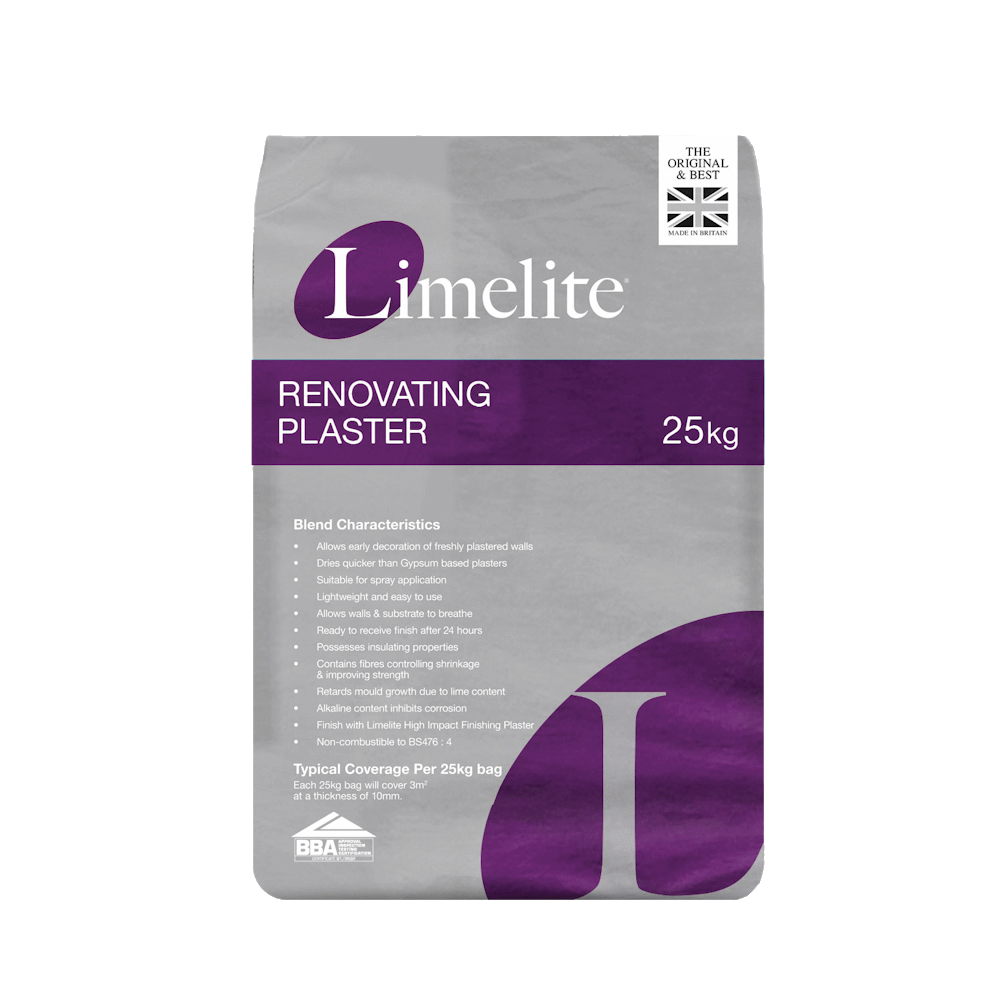
More insulating, reducing condensation - Limelite renovating plasters deliver thermal conductivity value on average three times lower than gypsum plasters. This increased thermal efficiency is due to the use of expanded perlite, which improves the insulation properties of the wall – making it warmer to the touch.
Alkaline and mould inhibiting - Since lime is alkaline, lime building materials also naturally inhibit the growth of bacteria and mould.
This new legislation makes it an urgent priority to take proactive steps to introduce long term solutions that deal with some of the root causes of the problem but are also achievable within budgets and with minimum disruption to residents.
There are tried and tested solutions out there that work. One of them is Limelite Whitewall One Coat Plaster, a modern lime-based plaster that is easy to use, fast drying and delivers a breathable finish that helps prevent recurring mould.
Using Limelite Whitewall One Coat Plaster allows landlords to escape the costly cycle of rinse, repair, redecorate and repeat that can drain limited budgets, take up valuable time and damage client trust.
All the evidence suggested that everything else being equal (ventilation, occupancy, moisture sources etc) Limelite breathable plasters significantly reduce condensation and persistent damp and mould.
Limelite plasters can be used as a three part system with Limelite Easy Bond breathable bond coat/primer, Renovating Plaster and High Impact Finishing Plaster or as a single layer Whitewall One Coat Plaster.
Although any kind of plastering work involves a degree of disruption, using Limelite plasters is far less time consuming, costly and disruptive than installing solid wall insulation and doesn’t require increasing wall depths and sacrificing living space and the size of window reveals.
Flooding and flood resilience are a growing concern, particularly for residents living near major rivers and floor plains. Limelite plasters can speed up flood repairs. As they are breathable,they allow repairs to be made more quickly after flooding while allowing any retained moisture in the walls to be released. They dry quickly between coats, meaning repairs can be completed quickly. The breathability also improves resilience, enabling faster drying and re-habitation if flooding happens again.v